Re-Storying the Archive: Embodied Standpoint Literacy (EmSL) and the Transnational Reimagining of Narrative Pedagogy
by Temitope Ojedele-Adejumo | Xchanges 21.1, Fall 2026
Transnational Positioning and AAGS as Analytic Case
Much of the narrative scholarship has productively advanced inclusive and transnational approaches to literacy by demonstrating that narratives are socially situated and shaped by relations of power. These contributions provide an important foundation for understanding literacy across diverse contexts. Building on this work, my analysis complements Sommers’ conceptualization of narrative by emphasizing the importance of embodied specificity. Rather than approaching difference primarily through broad categories such as underrepresented, minoritized, or transnational, EmSL foregrounds the importance of naming the particular communities whose lived experiences are under examination and attending to the historical, cultural, and institutional conditions that shape their writing. Such specificity allows scholars to move beyond generalized accounts of difference toward a richer understanding of how embodied factors become resources for rhetorical action.
Accordingly, this study centers AAGS as a specific community and a situated case within diasporic African and broader transnational populations in the United States, whose experiences reveal the embodied, institutional, and rhetorical conditions through which narrative operates. In doing so, it moves away from treating difference as a generalized condition and instead demonstrates how literacy and narrative are shaped by distinct histories, constraints, and negotiations. Addressing such specificity not only deepens our understanding of transnational literacy practices but also invites a more iterative movement between broader publics and localized communities, where shared structural conditions remain visible even as the embodied complexities of particular groups come into focus. Focusing on AAGS, therefore, enables a more nuanced understanding of the broader diasporic African student experience, offering insight into how linguistic histories, transnational trajectories, and institutional structures shape participation in U.S. academic and professional spaces. This focus becomes especially important in the context of increasing global student mobility.
In recent decades, international student mobility has increased significantly, driven by globalization and the appeal of foreign education and career opportunities (Gargano, 2009; Duany, 2011). In 2020, over 5 million students worldwide pursued degrees abroad, promoting the growth of transnational communities and reshaping the landscape of higher education (UNESCO, 2022). The U.S. remains a prominent destination, with international students making up 5.5% of total enrollments and coming from over 200 countries (IIE, 2022). These students not only contribute $28.4 billion annually to the U.S. economy but also enrich the academic and social diversity of U.S. campuses (NAFSA, 2022). According to The Open Doors Report on International Educational Exchange (2023), 50,199 international students from Sub-Saharan Africa studied in the U.S. during the 2022/23 academic year, reflecting an 18.1% increase from the previous year. Among this group, 21,237 were graduate students, a 26.6% increase from the prior year’s total of 16,772 African graduate students. These figures underscore not only the scale of African student presence but also the urgency of examining how these students navigate and make meaning within U.S. academic and professional spaces.
In the twenty-first century, the field of technical and professional communication (TPC) continues to evolve in response to globalization, technological innovation, and an intensified commitment to more inclusive and socially responsive institutional practices. As Johnson-Eilola and Selber (2012) note, these shifts are not only methodological but epistemological, compelling scholars to reexamine whose knowledge systems, literacies, and communicative practices are recognized within the profession. More than focusing on who is doing the work, they further argue for recognizing the receptive value of the TPC work being done, especially for “lay audiences” (p. i). Miller (1979) argues that when we move beyond viewing language as merely a vehicle for transmitting information, technical writing becomes a “kind of enculturation” that helps individuals understand how to belong to a community (p. 617). Building on this perspective, Sullivan (2020) similarly argues that TPC, as a “descendant of rhetoric” (p. 223), must move beyond what John Mitchell describes as “indoctrinat[ing] our students in the forms appropriate to their employers” (as cited in Sullivan, 2020, p. 223) toward more reflective, ethical, and inclusive approaches that acknowledge the social and cultural dimensions of technical work. Likewise, Agboka (2013) and Walton, Moore, and Jones (2019) call for a broader understanding of technical communication as a site of advocacy and justice, emphasizing that communicative practices are always embedded in power relations.
Within this evolving landscape, these arguments become especially relevant for understanding how African international graduate students navigate their institutional positionings and literate practices in U.S. higher education and technical communication contexts. Their experiences reveal how race, language, and nationality intersect in shaping participation in professional communication. As Jones et al. (2018) observe, the inclusion of culturally diverse communicators demands not only representational diversity but also structural transformation in how the field defines expertise, professionalism, and rhetorical competence. For AAGS, these expectations are navigated through transnational literacies informed by colonial histories of English, culturally grounded epistemologies, and contemporary institutional demands. Their writing, ranging from class assignments and project deliverables to conference proposals and academic publications, serves as both a site of negotiation and a record of rhetorical agency.
In the technical communication workplace, writing operates as both a material and epistemic practice that bridges academic learning and professional application. These texts do not simply demonstrate disciplinary competence; they also perform institutional belonging. For AAGS, producing such texts often involves navigating racialized perceptions of credibility and linguistic legitimacy, revealing the implicit norms that govern whose rhetorical styles are recognized and valued. These dynamics underscore why studying AAGS’ communicative practices is essential for understanding how TPC constructs and negotiates professional ethos across transnational contexts.
Building on this understanding, the communicative practices of AAGS can be read as narrative acts that extend beyond the production of texts to include the ongoing work of meaning-making within institutional contexts. The documents they produce, whether in classrooms or professional settings, are not only responses to assigned tasks but also sites where experiences, identities, and expectations are negotiated and articulated. From this perspective, narrative becomes central to how AAGS engage TPC, as they draw on their lived and embodied experiences to make sense of institutional demands and to position themselves within them. Through these narrative practices, they do not simply reproduce dominant conventions but actively interpret, adapt, and at times resist the norms that shape their participation.
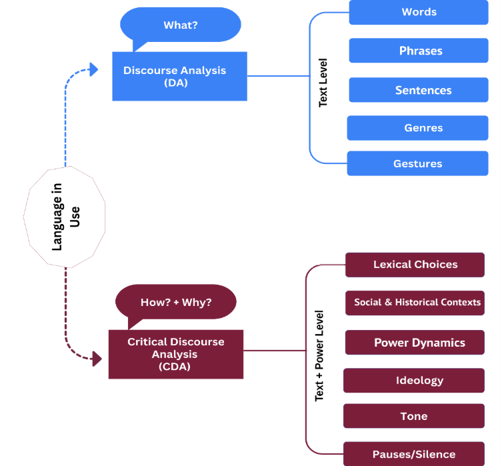
Drawing on data from semi-structured interviews and writing samples from 10 AAGS selected to reflect a range of disciplinary backgrounds and experiences, this study examines how stories that are heard and lived are retold in interviews and, in turn, inform the literate productions through which academic success and professional positioning are negotiated. To examine these narrative processes, the study adopts a mixed-methods research design grounded in institutional ethnography (Smith, 2005), where interviews serve as a mode of inquiry that begins from participants’ lived experiences as entry points into understanding the broader social organization shaping their lives, alongside Critical Discourse Analysis (CDA) of writing samples (Huckin et al., 2012), which examines how textual features are connected to wider social and institutional contexts. Semi-structured interviews provide insight into how participants narrate and make sense of their experiences, while writing samples offer a complementary lens into how these narratives are taken up within academic and professional contexts. By bringing these data sources into conversation, the study traces the movement between lived experience, narrated accounts, and literate production, allowing for an analysis of how participants interpret, negotiate, and respond to the institutional conditions that shape their participation.